South Yorkshire Times, December 15th 1933
Mexboro’ Memories
Pre-Coal And Pre-Dole
Some Old Worthies
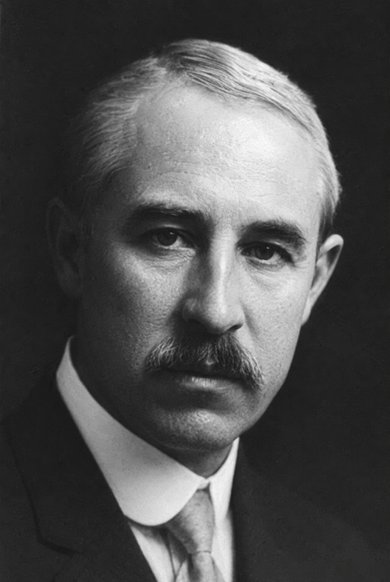
We are indebted to Mr. D. V. E. Dodsworth, of Adwick Road, Mexborough for some interesting notes from which it is possible to present a picture of Mexborough as it was sixty or seventy years ago, long before it became a mining town in the sense of being almost entirely dependent on that industry.
Mr. Dodsworth is a member of an old Mexborough family; he was born in the town and a good deal of what follows is personal reminiscence. He is old enough to remember Mexborough when it had no important coal mine nearer than Kilnhurst and West Melton, that is before the Denaby and Wath mines were sunk. Denaby Main was in course of sinking and a Mexborough man, Frank Jagger, was in charge of the operation and brought the first lump of coal to the surface.
A Busy Little Town
Before the coming of coal, Mexborough had at least a dozen industries nearby all of which have fallen into decay. There is still flour milling and brick making but the potteries have gone the way of the boatyard, the brewery, the glass bottle works, the foundry the quarrying and nearly all the farming. Most of the little town’s industries were along the “water front,” and dependent to some extent on canal transport. There were boatyards where canal barges were not merely repaired but built. The flour mill stood where its modern successor now stands alongside the boatyard, the brewery and the glass bottle works of Joseph Barron – and the later divided between the Barrons and the Waddingtons. Glass bottle making was for decades the town’s most important industry, but between the pottery and the glass eras came the “iron age” and for a time the Don Iron Works owned by the Barker family was the largest centre of employment. Here wheels and axles for railway rolling stock were forged and exported to Russia and other parts of Europe. Beyond the iron works (situated where the Olympia rink now stands) was another boat yard owned by Thomas Scholey. The brickyard in the northwest quarter of the town was in full activity and a dozen heavy drays were constantly employed carrying bricks and sanitary pipes down to the leach for shipment to Hull.
No Unemployment
In what is now Bank Street. on the site of the Trinity (Wesleyan) Church dealer, and a prominent Wesleyan stood the Rock Pottery and some distance away were three stone quarries, worked by George Turner, Robert Carr and George Jenkinson, who did a very good business in grindstones for the Sheffield Cutlery trade. Agriculture was far more important then, and a good deal of employment was available in the threshing season. One Mexborough man, Mark West. owned three or four threshing machines. Mexborough in those days was broad-based on a variety of useful and remunerative industries and economically, in relation to its population, its position was a good deal sounder than it is today. There was no “dole” except for the aged and infirm, but then there was no unemployment among the able-bodied.
Mr. Dodsworth, however, is not among those who consider that the town “has seen its best days” and has “no future.” He agreed with a recent statement in this paper that Mexborough’s position and prospects compare very favourably with those of most towns of its size and character in this part of the country, and is not without its hope that a revival and development of canal transport may bring new importance and prosperity to Mexborough, reviving and greatly extending some of its old industries.
Old Mexborough Worthies
Mr. Dodsworth has an interesting note or two on some old Mexborough worthies.’ There was Henry Duke. the road ganger. who kept the toll bar at the east end of the town, where the roads to Conisborough and to High Melton were “gated.” John Smith (and his dog) who were employed in the summer looking after the fruit at the Old Hall. were “characters.” The hall was a wooden structure with a conical thatched roof and stood on the site of Mr. Cramp’s flour warehouse. John Lewis. a farmer, was in great demand at rent dinners for his songs. Down at “Strawberry Island” (now Lower Church Street). lived George Pashley, a horse-breaker; Hamlet Monett. a crate-maker; Tommy Rawson, a wheelwright: Joe Jenkinson, who worked the flour mill at High Melton; and John Beevers, who owned several boats. Other prominent men in that quarter of the parish were John Makin (Mr. Dodsworth’s grandfather); William Waring, a farmer and a great lover of hunting; Fred Truelove, the blacksmith; and one or two canal men—John Ward, John Woffenden of the Ship Inn, and George Bisby of the Ferry Boat Inn, where the boat-launch suppers were held. The Reverend Henry Ellershaw was vicar, and friend and counsellor of every man, woman and child in the place.
Near the church stood the tithe barn and a row of cottages and workshops. since demolished. Here Mr. Dodsworth’s father carried on the trade of a wheelwright and joiner for many years. and hard by. the Manor Farm was occupied then (as now) by the Sutton family—in those days by the brothers George and John. Charles Pashley, another farmer, occupied another thatched cottage at the bottom of Quarry Lane, and the Blacksmith’s shop which is still there was occupied by William Cooper., a person of some importance in the parish. Cooper was a great athlete, a boxer of note and (it is said) the only man who has ever jumped across the canal locks. He was the only person to possess a railway timetable., and it was customary to resort to the smithy to “look up” a train. The site now occupied by the Co-operative Bakery., was a dairy farm of considerable importance run by John Dickinson. J. W. Ainley was the postmaster and druggist; Jowitt, a prominent Wesleyan was the leading grocer and draper. Other prominent members of the Market Street area were John Mawson, a butcher; Varah Lockwood a tax and rate collector; Jonathan Heeley, farmer; John W. Wilkinson a stonemason (who afterwards became a partner in a glass bottle works in Swinton); John Shaw a farmer and boat owner; Henry Stenton, agent for the Montagu property and a considerable owner of property himself; Charles Dickinson, a well-known grocer; Peter Waddington, a boatyard owner; and John Reed, earthenware manufacturer who lived at Prospect House and at one time employed the famous Robert Glassby, afterwards sculptor to Queen Victoria. The carving on the stone arch in the grounds of Prospect House is the work of Glassby executed by him as a tribute to his older master.
On the site of the National Provincial Bank lived William Roebuck, a general dealer and a prominent Wesleyan preacher. In the Doncaster Road region there were Joel Kirby, a noted Temperance reformer who lived at Vine Cottage; James and #sam Armitage, property owners; Alfred Baggaley, an earthenware manufacturer; George and William Harrop (still represented by Harrop’s Row) and Samuel Dodswort, a joiner and builder. In those days the Montagu Hotel was kept by one Crosby, who sold no liquor on Sundays.
Although High Street had nothing like its present commercial importance, either actually or relatively to the rest of the town, it was a busy throughfare and among the thriving tradesmen who founded the business of the street were: Joseph Bullock, Dennis Greaves, W. H. Hawcroft, Frank Pepper, Peter Emery, J. W. Fletcher, W. H. J. Mills, Thomas Bennett, Jospeh Asquith, Joshua Jennings, Joseph Beaumont, Herbert Webster, Fred Lamb, George Codd, William Allison, Richard Elliott, John Swallow, John Harrison and the brothers Greaves and Knowles.
A Newspaper Pioneer
Mr. Dodsworth concludes with a pleasant note about the founder of this newspaper. Walter Turner, bookseller and stationer. “This enterprising young man decided to start a weekly newspaper and when it actually appeared it caused a sensation in the town. I remember the time when a blind man was conducted along the streets of the town carrying a bundle of papers and ringing a handbell. He cried in stentorian tones “Mexborough and Swinton Observer a Penny”. The paper changed it name from the Mexborough and Swinton Observer to the Mexborough and Swinton Times and eventually to its present title. Its wonderful growth is a standing tribute to the enterprise and energy of its founder. Among prominent residents living in this part of the town were James Buckly, a fishmonger; Thomas Walton, a cabinet maker; Benjamin Chambers, a greengrocer; Mr Thomas Shutt at the Commercial Hotel, a well-known cricketer and the Barker family , the original of Mexborough house.